

This is the second of four posts on the book The 7 Habits of Highly Effective People. It is the second book in my current series where I are breaking down the 12 books that have most impacted my leadership journey into simple, actionable principles. If you missed the first post, you can read it here.
If you are like me, you fell into leadership with little to no training. Most likely you performed well at your job and were gifted the title of leader as a result. And you’ve been trying to figure out how to do it ever since. I started off by trying to emulate people that I thought were good leaders. Those people were confident. They were good at presentations. They always knew the right thing to do. They were very skilled in their craft. And as a result, people gravitated to them. They listened to them. I wanted to be that kind of leader. So even though I wasn’t confident, I pretended I was. And while I didn’t always know the right thing to do, I acted like I did. I tried to act as if I was the person who knew the most about my craft and stopped saying things like ‘I don’t know’ or ‘I’m not sure.’ I created a leadership persona that I donned when I was at work. My leadership became a performance. And even thought I wrestled daily with imposter syndrome, I continued to present this facade because it seemed to be working. But over time it got heavier and more tiring and honestly very lonely.
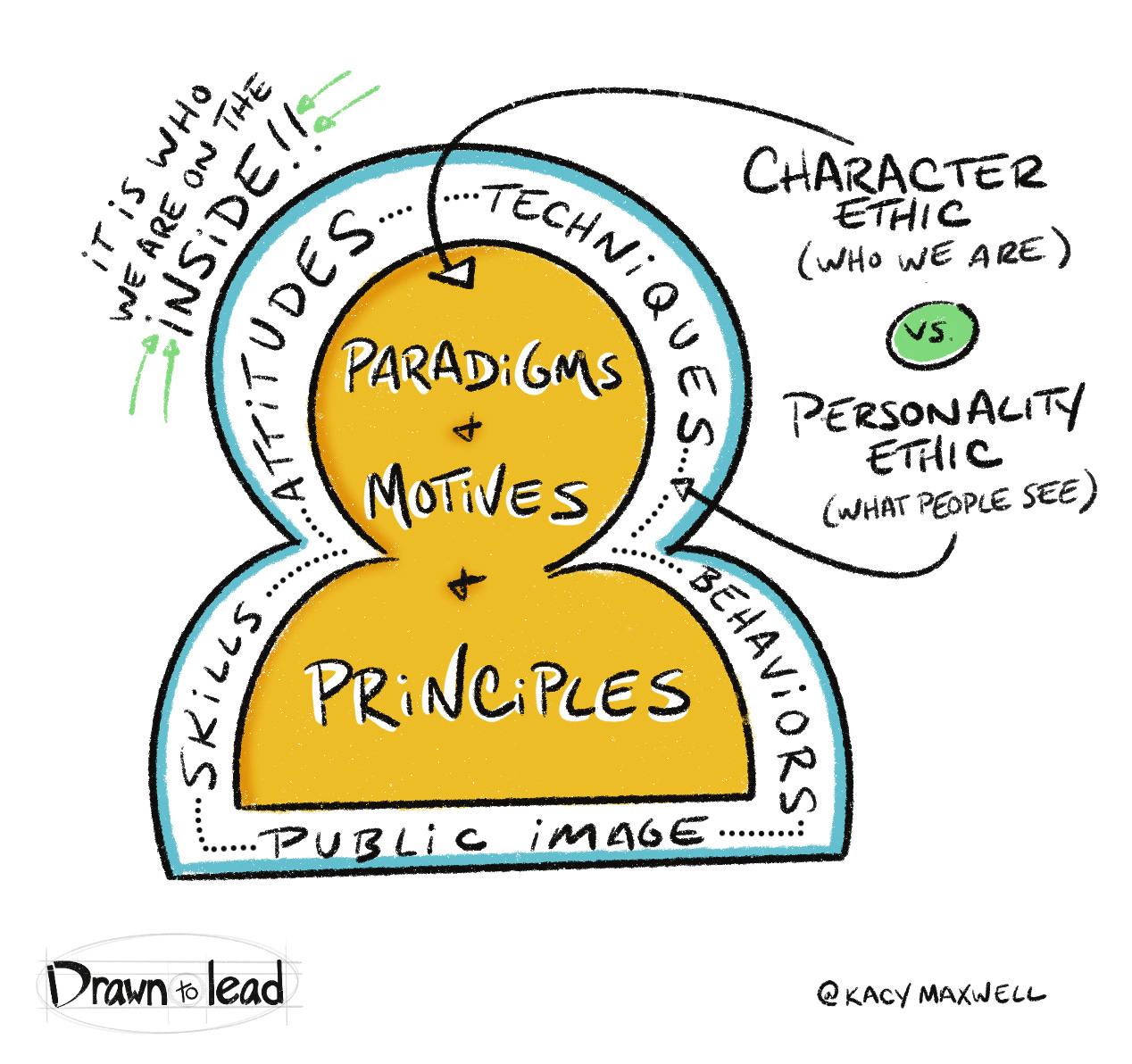
In The Seven Habits of Highly Effective People, Covey reviewed success literature over the last 200 years and found that for the first 150, the content focused on development of character as the key to success. However, after WW1 and for the 50+ years that followed, it shifted to focus on development of the exterior; to cultivating your image. And since then, we have created a generation of people that primarily focus on honing the exterior, often to the neglect of the interior. If you need convincing, just look at most of the leadership development training today. A majority of it focuses on what we traditionally call ‘hard skills' like techniques, behaviors and abilities. They offer hacks or fixes or short cuts to become great at doing something, yet rarely offer any help on how to become great at being something.
Character is Essential
This is the reason why I am spending four different posts to dig in on this one principle that the foundation of a great leader is their character. I truly believe that if we spent more time focusing on character development vs. personality development, we would all be better leaders for it. Why? Because our motivations shape the way we everything. And our motivations come from our character. They influence the way we show up for our team on a daily basis. The way we handle stress at work. The way we interact in 1:1s. The way we walk with team members going through personal or performance challenges. Our character shapes it all. But not just that, I believe that character is the answer to imposter syndrome that so many of us deal with.
Imposter Syndrome by definition is feeling like you are not enough, or you don’t deserve the role that you are in. That you don’t measure up. Or that your achievement was based on luck or some other reason outside of your control. I am well acquainted with this feeling as I have experienced it often in my career. And if I am honest, it still hits me at random times even today both in my work and in my home life. The times in my journey that I experienced this feeling the strongest, is when I have been so focused on the personality or image side of my leadership. Times when instead of relying on character traits like humility and honesty and answering ‘I don’t know,’ I leaned on my pride and ego and confidently gave a concrete response that I had no idea whether it is right or not.
It shouldn’t be a surprise that so many high achievers struggle with this. After all, we’re taught this from a young age. Schools teach us to we move forward by mastering skills. We get graded on our ability to do certain things. Social Media rewards ‘experts’ who show us how to succeed by doing. And outside of the one off ‘character award’ that has made it way into some schools, we rarely reward those who develop what’s on the inside. As a result, our view of what is important in the world has become distorted.
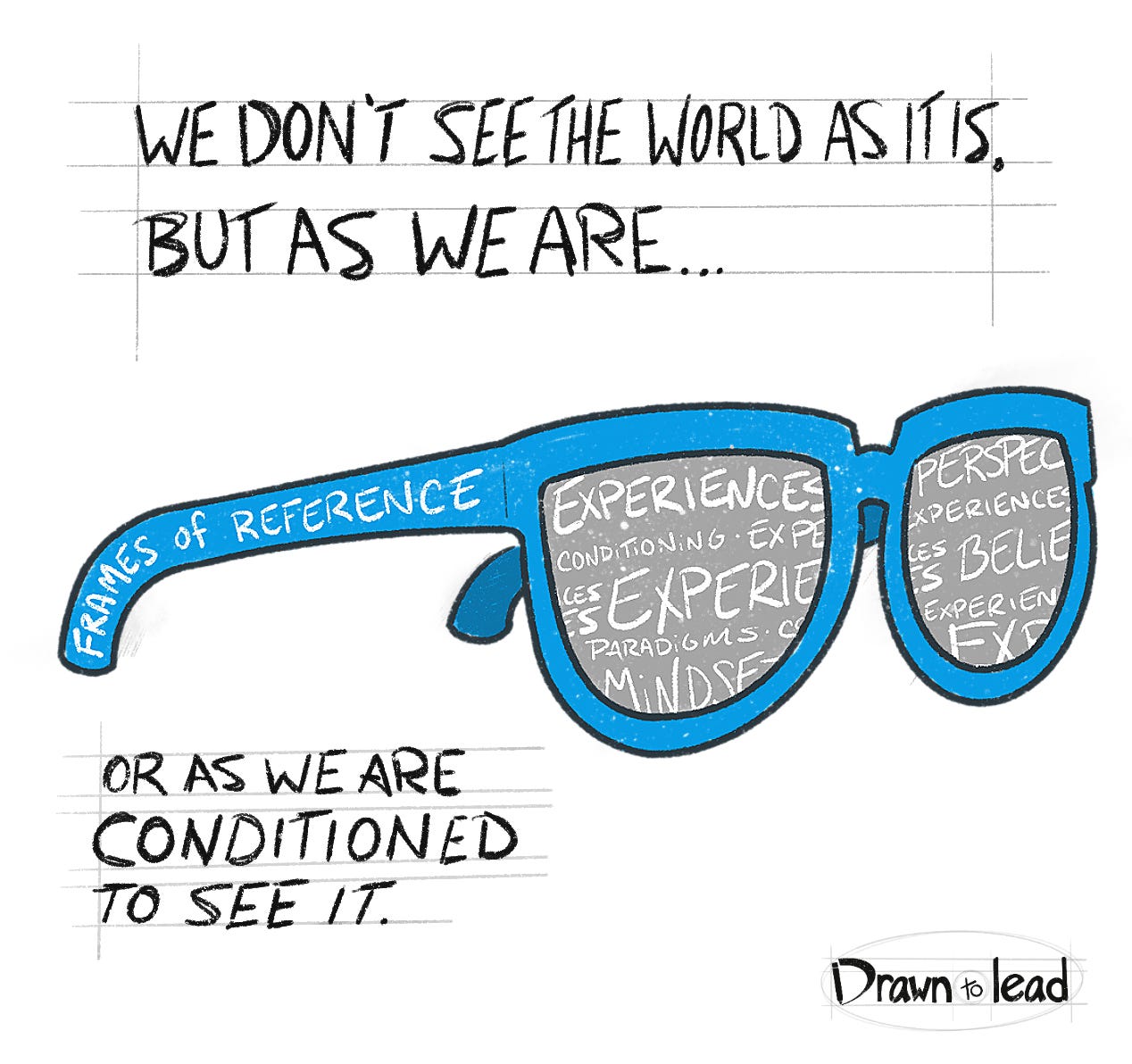
But thankfully it’s changeable. So if you feel like imposter syndrome is eating your lunch, the answer is not simply doubling down on developing a new skill or getting ‘better at your job.’ That will only get you as far as the next promotion and then it will start all over again. It’s honestly a never ending and exhausting cycle. Instead, when you learn to focus on building and leading from your character, you will stop worrying about doing and start focusing on being. Remember, while we think we are seeing the world as it is, we are actually see the world as we have been conditioned to see it through our experiences. And we all have the power to clean those lenses so we can see a little clearer.
More to come.
Kacy
Thank you for reading. This is a passion project of mine and I hope that you got something out of it. There are two ways you can help support me in this mission: become a paid subscriber or share this with a friend!
Let’s connect on Instagram: @kacymaxwell

I wonder if sometimes imposter syndrome is less about doubting our ability and more about our identity lagging behind our responsibility. We’ve grown into a room our internal picture of ourselves hasn’t caught up with yet. Maybe the work isn’t proving we belong there. It’s letting experience, evidence, and trusted people help us update who we believe we’ve become.