


I sat down with a young man I’m mentoring recently who asked me:
How do I come back from this? How do I not let this mistake define me?
Deep down we are all terrified of failure. You’ve probably heard it said that failure is one of the best learning tools. And if you ask any truly successful person, they will rattle off a list of failures along their path that got them where they are today. While I know this to be 100% true, as a recovering achiever, I still really never want to fail. But who does right?

The date is set and the countdown is on! I will be relaunching the new book series starting on Monday, August 10. Read more about what’s coming and enter to win a leather journal or bookmark!
I am getting better though. It’s no longer something that stops me from trying new things or taking risks. Because I’ve failed enough times to knows it’s not the end of the world. Yet failure in and of itself doesn’t necessarily produce valuable learnings. There is often work that needs to be done. I created the visual below a while back to help me better work through my fear of failure. On the surface it seems like a simple image that many have liked and moved on from, but there are some key things you may miss if you don’t slow down and dig a little deeper.
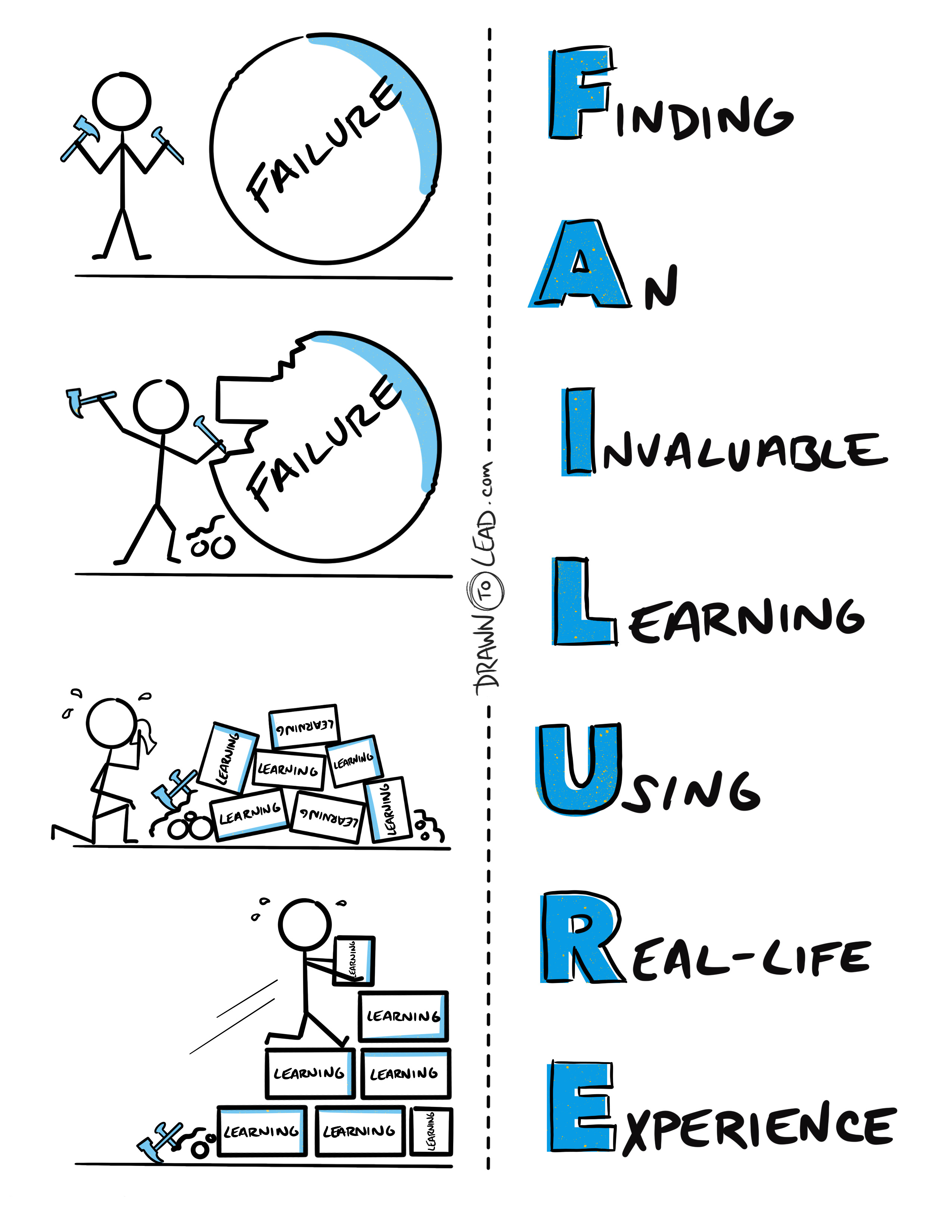
UNPACKING THE VISUAL
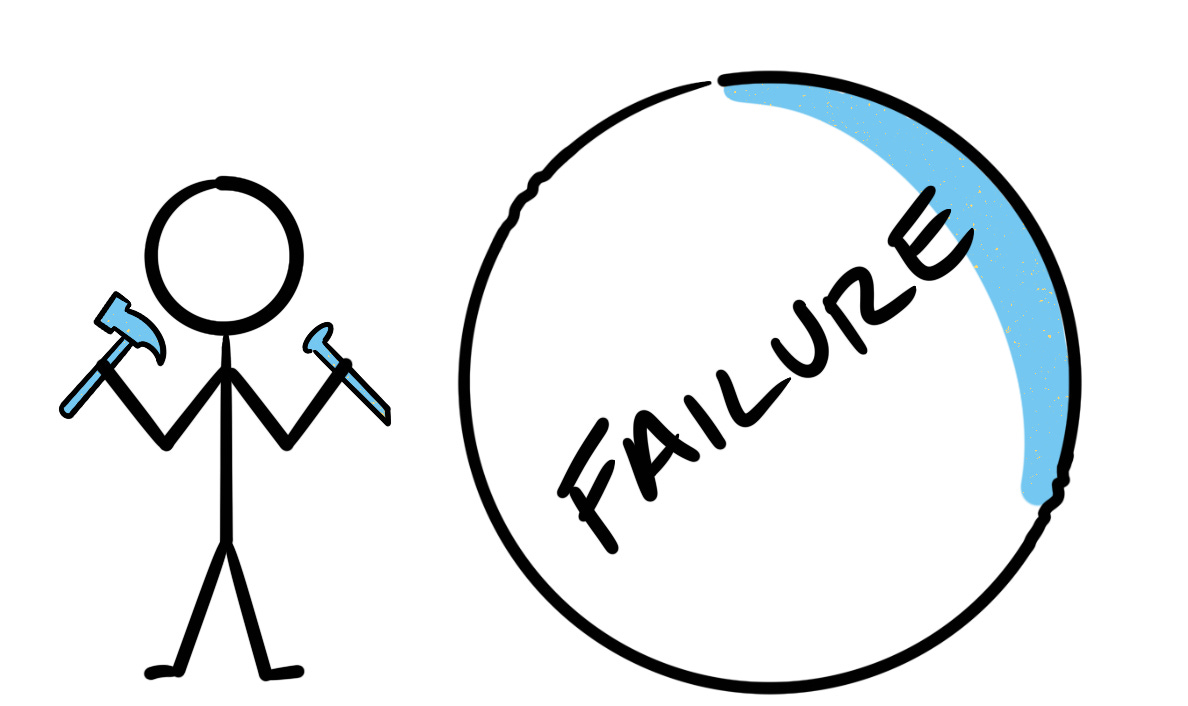
First, look at how freaking big the failure is compared to the guy! It’s gigantic. That’s what failure can feel like. A huge boulder that’s larger than life. Sometimes we convince ourselves that our mistakes are bigger than they actually are. These mistakes can block our path and stop us from moving forward. But if we can reframe them, we can use them like this guy did. Notice that even if the first box, he is already looking at the failure with tools in his hand. This isn’t his first time seeing this rock and even though it still seem enormous, he knows what he needs to do.
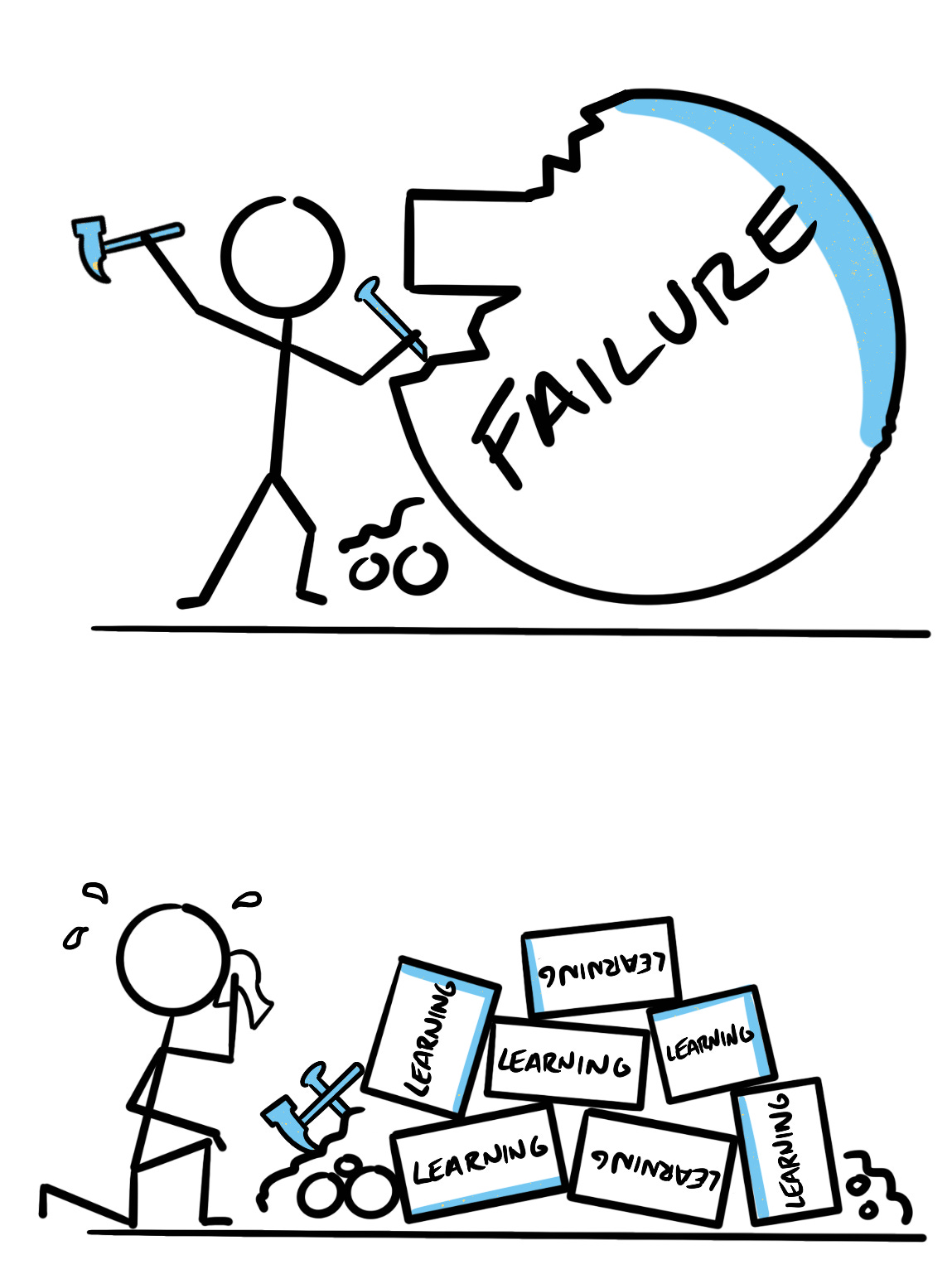
In these next two frames we see what is necessary to learn from failure. Just failing and moving on doesn’t bring growth. It takes hard work. The guy only has two simple tools: a hammer and a chisel. If this failure was made out of rock, it would take a long time for him to turn it into bricks. This was intentional because it’s not a fast process. For me, I have to force myself to slow down and work through what actually happened before I can really understand how I ended up off course. That can look like journaling or talking with a friend or coworker who will be honest with you. And while it isn’t physically hard, it’s emotionally taxing because you have to relive the thing you already want to forget. But if you want to get to the real learnings, you have to put in the work!
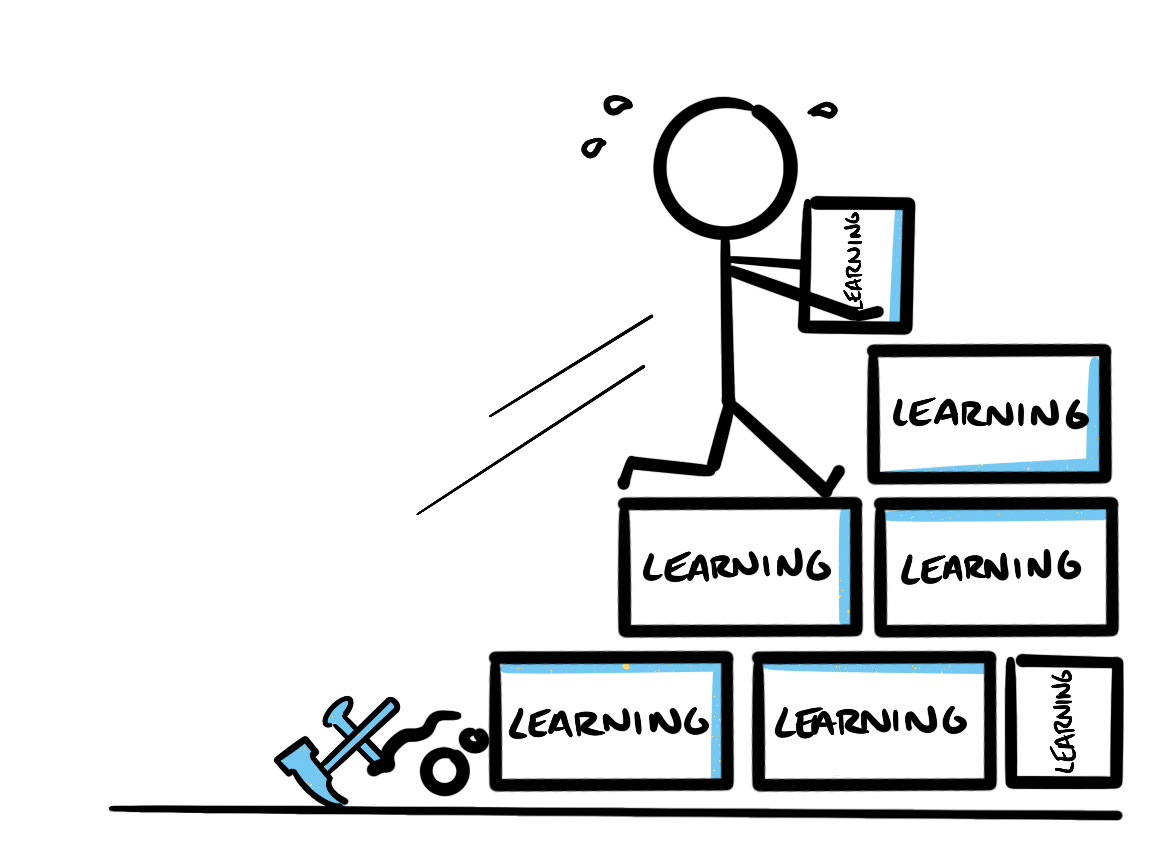
The last frame shows the guy putting his learnings into action. While the first frame showed a failure blocking his forward progress, this last one shows a set of steps leading him onward and upward. Once you have done the work to uncover the learnings, you have to put them into action. Knowing what you did wrong is one thing, using that to change how you approach things moving forward is another. Also, he’s still doing work. You see the sweat? Changing your normal way of doing things isn’t easy either. But what got you here, won’t get you there.
ALL LEADERS FAIL
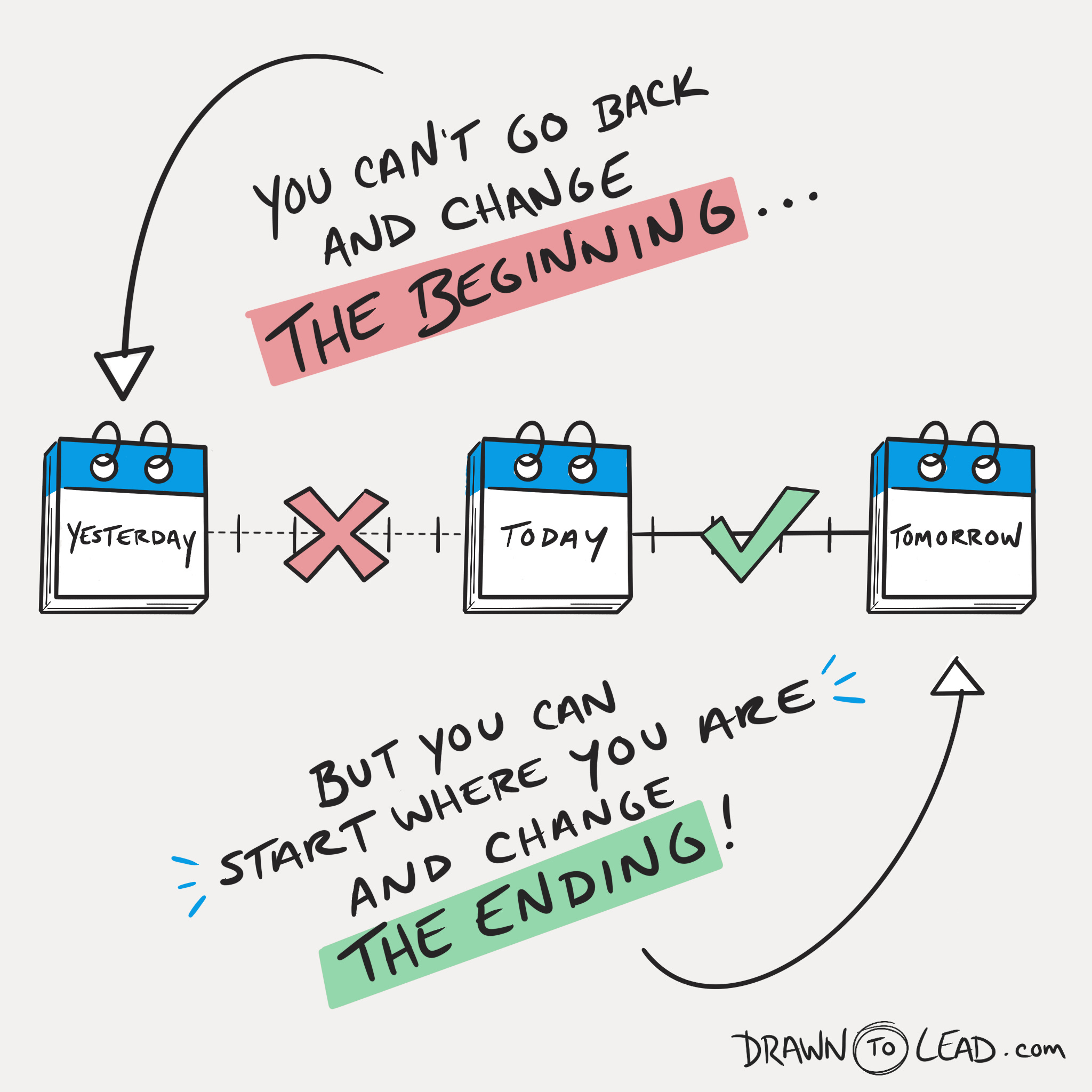
No matter how good you are at leadership, there is going to be a time very soon where you will fail. It’s inevitable. But remember that failure is a part of leadership. And the next time you fail, do the work to truly learn from it and use those learnings to grow. You can’t go back and change the beginning, but you can start where you are and change the ending. (Another great quote from CS Lewis).
If you found this post value, forward to another leader to encourage them on their journey. And follow Drawn to Lead on Substack and Instagram for more!
More to come.
Kacy @ Drawn to Lead

If you would be interested in receiving a handwritten note, send me your address and I will shoot one your way!