
This is the third of four posts on the book The 7 Habits of Highly Effective People. It is the second book in my current series where I are breaking down the 12 books that have most impacted my leadership journey into simple, actionable principles. If you missed the first post on Start With Why, you can read it here.
In my first post on the 7 Habits of Highly Effective People I broke down Covey’s principle that the foundation of a great leader is their character, which is basically a composite of their habits. That concept is so important because your character shapes the way you approach everything, especially in leadership. And if you want to start leaning into growing your character, the 7 habits are a great place to start.
All of the habits in this book are solid, but there is one in particular I wanted to highlight this week. It’s Habit #5: Seek first to Understand, then to be Understood. Like most of these habits, this one seems pretty straightforward, but has a lot of depth hiding in it. To start, our natural tendency is to want the opposite. As leaders, we feel like our team really needs to understand us. Our ideas. Our point of view. Our needs and wants. And so we share them…a lot. We mistakenly think that if they understand us, everything will go so much better. But when we are so focused on being understood, we communicate that our teams ideas, points of views, needs and wants aren’t all that important. And when someone feels like you as their leader don’t care about any of those things, they begin to believe that you don’t have their best interests in mind. That’s when trust begins to erode.
And that’s why character is so important in leadership. A leader of high character cares about the people they lead and wants them to feel valued. And they also do the right things to show their team that they matter. But how do you do that? There are actually some pretty simple things you can do every day to communicate to your team you care about them. Covey calls these actions ‘investing in their emotional bank account.’ I think it’s more memorable to call it ‘filling their emotional piggy bank.’
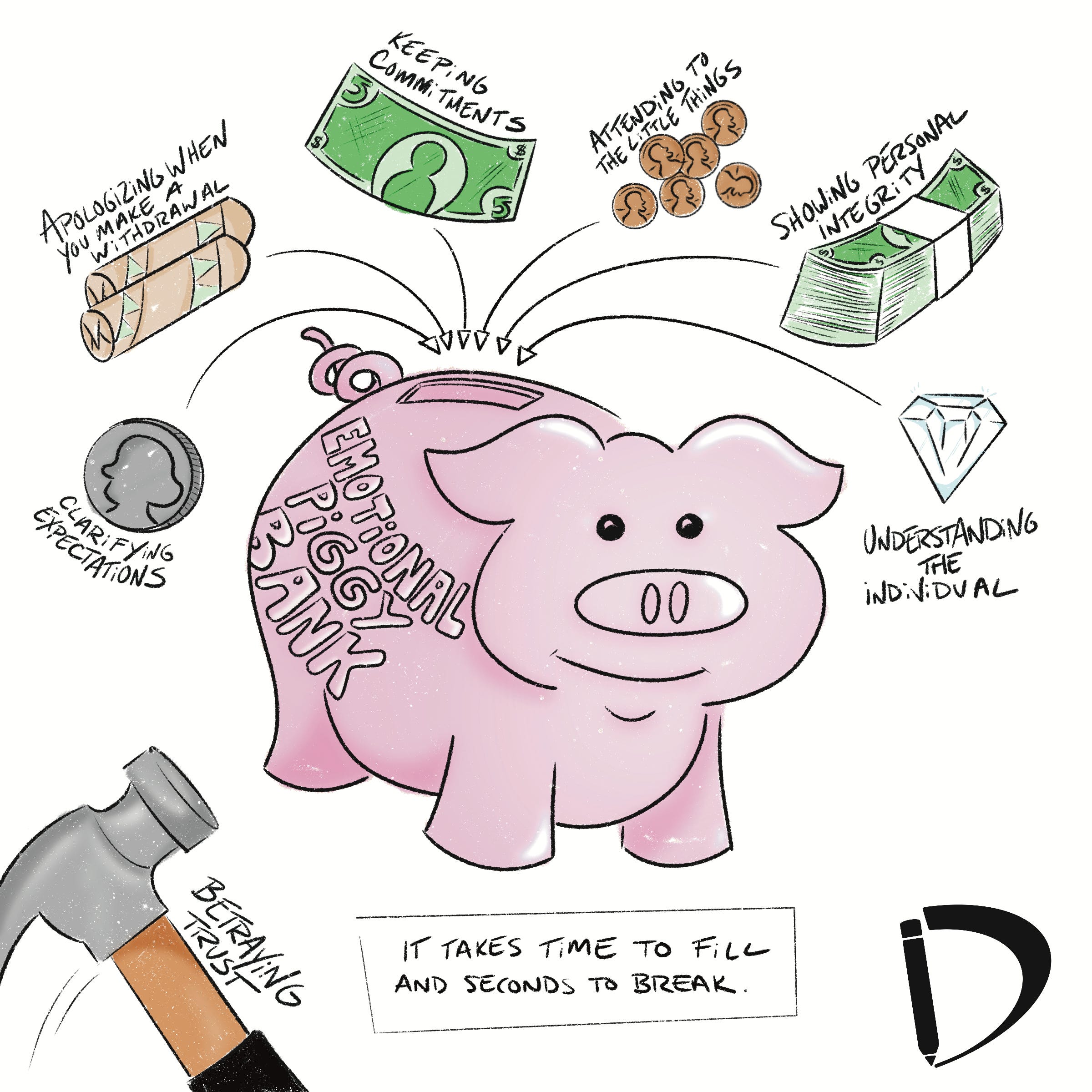
If you look at the six things he shares as deposits you can make, they are things that you could start doing tomorrow. They are really simple and on their own, don’t have a major impact. But over time, they compound for a massive impact. Brené Brown gives another metaphor of this same concept calling it The Trust Jar. Each time you do what you said you would do when you said you would do it, you put another marble in the jar. When the jar is full, you have some pretty unbreakable trust.
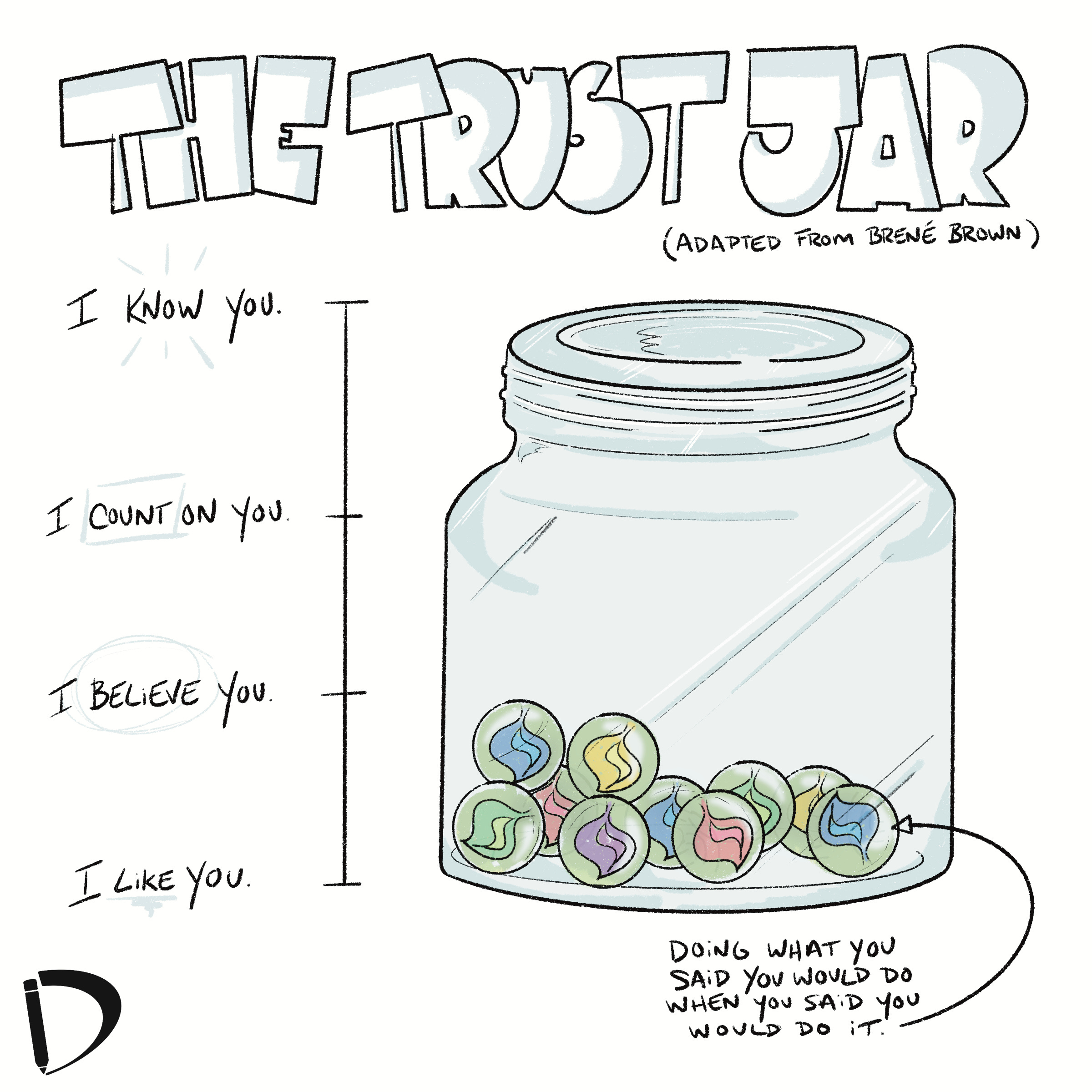
With both of these concepts, it’s the consistency over time that builds trust. Real trust takes time to build, but it is worth it. Remember, people follow who they trust. And when you build a team that functions on trust, it will be truly unstoppable.
So here are a few questions for you to think through this week around the idea of character building and seeking first to understand, then to be understood:
Am I regularly investing in my team member’s piggy banks? What could I do more of?
Am I listening and asking questions to understand my team member’s point of view before share mine?
Do my team members believe I have their best interests in mind? Better yet, do I have my team’s best interest in mind or my own?
More to come.
Kacy
Thank you for reading. This is a passion project of mine and I hope that you got something out of it. There are two ways you can help support me in this mission: become a paid subscriber or share this with a friend!
Let’s connect on Instagram: @kacymaxwell